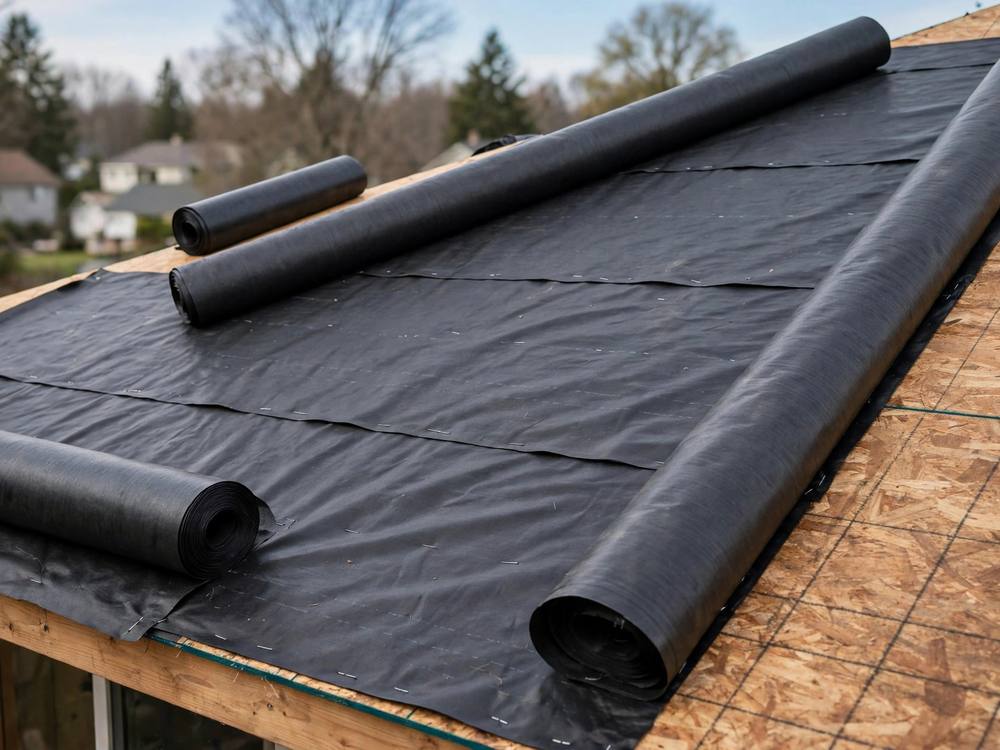
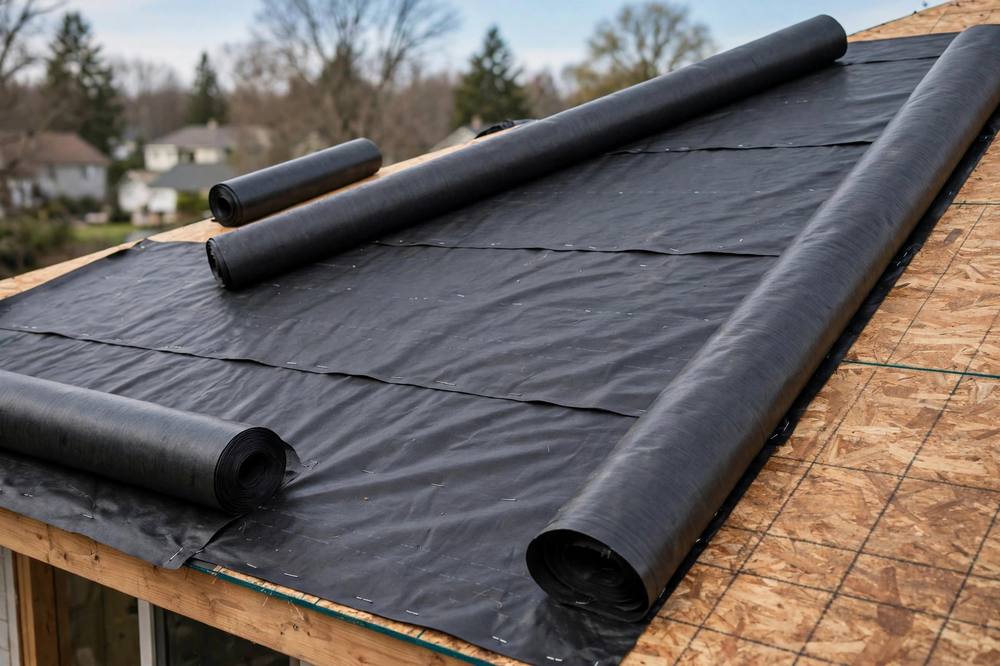
Storm damage roof repair in Van Nuys, California means dealing with Valley wind and concentrated winter rain on roofs that are often decades old. Van Nuys homes have a median construction year of 1968, with 67.2% built before 1980, so a Santa Ana gust or a February downpour tends to find flashing, valleys and ridge caps that heat and age have already weakened. BFiber Roofing Repair & Install, at 14202 Hamlin St in Van Nuys, inspects the damage, stops active water entry and scopes the permanent repair. Call (818) 474-8963 to discuss your roof.
Inspect windward slopesTrace active leaksDocument for claims
We tarp firstStop active water entry first
We photograph damagePhotograph damage for your records
We water-testWater-test the repair
We match materialsMatch the existing roof profile
What our storm damage roof repair includes
A Van Nuys storm job is not a single patch. It is a sequence: find every entry point the storm opened, stop the water, then rebuild the layers in order so the next storm does not reopen the same spot.
Full roof inspection
Walk the field, the valleys and the ridge, and check the attic and deck from below, so wind-lifted shingles, cracked tile and failed flashing are all found before any repair is scoped.
Emergency tarping
Cover open sections and seal penetrations to stop water entering the home while the permanent repair is planned. Tarping is a stopgap, not the repair, and it is described as such in the written scope.
Shingle and tile replacement
Replace missing or lifted shingles and broken tile, matching the existing profile where possible, and renew the underlayment beneath the repair rather than covering failed layers.
Flashing and pipe boot repair
Reseal or replace flashing at chimneys, walls, valleys and pipe boots, because those details, not the open field, are where most Van Nuys storm leaks begin.
Insurance documentation
Provide dated photographs and moisture readings with the damage summary, so a homeowner can show an insurer what the storm changed and what was already aged.
Final water test
Run water over the repaired area and recheck the attic before the job is closed, so a repair that still leaks is caught on site, not at the next rain.
Homes and businesses.
The approach is the same for a home and a business: stop the water, find the entry point, and scope the permanent repair. What changes is the roof area, the access, and who needs the paperwork.
For homeowners
For a homeowner, a storm leak usually shows as a ceiling stain or a drip that appears only in heavy rain. The entry point is often upslope from the stain on a low-pitch Valley roof, so the inspection traces water back to its source instead of sealing the stain itself.
Wind-lifted shingles and ridge caps
Ceiling stains after winter rain
Skylight and pipe-boot leaks
For property managers
For a property manager, a storm on a corridor apartment or commercial building usually means ponding on a flat roof, an open membrane seam or a blocked drain. The priority is the same: stop water entry, protect the space below, then scope the membrane repair.
Ponding on flat roofs
Open membrane seams
Blocked roof drains
Storm damage roof repair in Van Nuys, California
A plain-language look at what storm damage roof repair involves on Valley roofs, and when a repair, a slope rebuild or a full replacement is the honest scope.
Storm damage roof repair in Van Nuys is the work of restoring a roof after wind or heavy rain has broken its weather barrier. On the Valley floor that usually means lifted or missing shingles, flashing that has pulled away at a wall or chimney, tile whose underlayment has failed beneath sound tile, or a flat membrane seam that opened under ponding water. The repair rebuilds the layers in order: deck, underlayment, flashing and surface, rather than sealing over the top of a failed detail.
Van Nuys weather arrives in bursts. Annual rainfall at the Van Nuys Airport station averages 13.42 inches, with February the wettest month at 3.79 inches, and a single atmospheric river on 4 February 2024 dropped 4.30 inches in one day. Santa Ana winds run October through April, with Valley gusts of 50 to 65 mph in strong events. That combination, heat-aged shingles plus a sudden wind or rain event, is why a roof that survived the summer can leak at the first winter storm.
Storm damage gets worse with every rain, so the first job is stopping water.
What it is
Restoring a roof after wind or heavy rain has broken its weather barrier, by rebuilding the failed layers in order.
When you need it
Missing shingles, ceiling stains, flashing leaks, ponding on flat roofs, or damage found after a Santa Ana wind or winter storm.
What to expect
Inspection and water-entry control first, then a written scope, then the permanent repair and a water test of the repaired area.
What to expect from our storm response
Five steps, from the first call to the final walk-through, for a storm-damaged Van Nuys roof.
Call and triage
Describe the leak, the storm and what you are seeing inside, including the roof type and approximate age if you know it. Active water entry is triaged first, and you will get a realistic picture of what the first visit covers.
Call
Triage
Window
On-roof inspection
A roofer walks the roof and checks the attic, looking at valleys, pipe boots, flashing, ridges and flat-roof seams, and photographs granule loss, lifted shingles, soft decking and failed details.
Walk roof
Scan
Photograph
Emergency stabilization
If rain is still a risk, open sections are covered and penetrations sealed so the home stays dry. You get photographs of the temporary work and a plain explanation of what was found before anyone leaves.
Tarp
Seal
Explain
Written scope and claim help
You receive a written scope with line items and material details, plus a damage summary with dated photographs that you can share with an insurer. Nothing is added to the scope after the fact without telling you.
Scope
Specs
Claim help
Repair and final test
Shingles, tile, underlayment, flashing and vents go back in the correct order for the roof type. Before packing up, the repaired area is water-tested and the attic is checked again.
Repair
Water test
Walk-through
Tools and methods we use on storm jobs
Move across a circle, or focus it and press Enter, for an illustrative thermal view of the photograph.
Infrared camera
Finds wet decking and insulation behind an intact ceiling, showing how far storm water has travelled before anything is opened up.
Moisture meter
Confirms readings on sheathing, framing and drywall, and gives a written record that separates fresh storm wetness from old staining.
Roofing nail gun
Fastens shingles and underlayment at the correct depth and pattern, which matters when a repair must hold through the next wind event.
Pry bar and shingle cutter
Removes damaged shingles and tile without tearing up the surrounding field, so a patch blends into the existing roof instead of damaging it.
Chalk line and utility knife
Keeps shingle courses straight and cuts underlayment to fit valleys and penetrations, the small details that decide whether a repair looks and performs right.
Thermal views are illustrative, generated from the photographs.
Methods
Roofing ladder and safety harness
Gets the crew onto steep pitches safely, with tie-off and staging planned before work starts.
Leaf blower and air compressor
Clears debris from valleys and gutters, then blows dust out of seams before sealing, because sealants and membranes only hold on clean surfaces.
Moisture mapping
Grids the roof and attic, takes readings at each point and marks wet zones, so the size of the repair is known before it is scoped.
Layered rebuild
Storm repairs go back in the same order the roof was built: underlayment, drip edge, flashing, surface, ridge vent. Skipping a layer is why patch jobs fail.
Water testing
After sealing a repair, water is run over the area and watched from inside the attic. If a drop shows up, the job is not done.
Insurance documentation
Dated photographs, moisture logs and a written damage summary formatted for an insurer, separating storm damage from wear so the covered portion is clear.
When Van Nuys homeowners call us
Wind-lifted shingles on a tract home
A postwar tract home loses shingles on its windward slope during a Santa Ana event, and rain starts coming in over a bedroom.
The slope is covered to stop water entry, the lifted and missing shingles are documented, and the repair renews the underlayment beneath the affected area before new shingles go on.
Outcome:The slope is covered to stop water entry, the lifted and missing shingles are documented, and the repair renews the underlayment beneath the affected area before new shingles go on.
Flat-roof ponding after winter rain
A corridor apartment building holds ponding water on its flat roof after two days of winter rain, with a stain appearing in the unit below.
The low spot and the drain are checked first, because ponding is usually a drainage problem before it is a membrane problem, and seams around the ponded area are inspected for openings.
Outcome:The low spot and the drain are checked first, because ponding is usually a drainage problem before it is a membrane problem, and seams around the ponded area are inspected for openings.
Ceiling stain after the first big storm
A homeowner near the Van Nuys Civic Center notices a ceiling stain after the first big storm of the season, with no visible damage from the ground.
The leak is traced to a failed pipe boot rather than to the stain itself, the boot and surrounding shingles are replaced, and the repair is water-tested before closing.
Outcome:The leak is traced to a failed pipe boot rather than to the stain itself, the boot and surrounding shingles are replaced, and the repair is water-tested before closing.
Branch impact through the deck
A tree branch breaks through the roof deck of a small rental building during a wind event, opening the roof to rain.
The opening is covered, the branch is removed, damaged sheathing and shingles are replaced, and the attic is checked for water intrusion beyond the impact point.
Outcome:The opening is covered, the branch is removed, damaged sheathing and shingles are replaced, and the attic is checked for water intrusion beyond the impact point.
Tile roof leaking at valleys
A tile home leaks at a valley after heavy rain, although few tiles look broken from the street.
The valley is opened to check the underlayment beneath the tile, because tile often outlasts the felt below it, and the valley flashing and underlayment are renewed before the tile is reset.
Outcome:The valley is opened to check the underlayment beneath the tile, because tile often outlasts the felt below it, and the valley flashing and underlayment are renewed before the tile is reset.
Van NuysVan Nuys Civic CenterLake Balboa
How storm damage roof repair runs in Van Nuys
Van Nuys gets its weather in bursts. Annual rainfall at the Van Nuys Airport station averages 13.42 inches, concentrated in winter, and Santa Ana winds from October through April bring Valley gusts of 50 to 65 mph in strong events. The housing stock makes roofs vulnerable: a median construction year of 1968, 67.2% built before 1980, postwar tract homes with original sheathing, low-slope additions and flat roofs that pond at the first blocked drain.
When storm damage is reported, the inspection starts at the windward slopes, the valleys and every pipe boot, because those fail first, and it includes the attic, where condensation after a wet winter can look like a leak. A permit is required for a full re-roof in the City of Los Angeles; for smaller storm repairs, confirm the repair-versus-re-roof line with LADBS for your scope, since the published trigger figures conflict and no fee figure is published here.
Storm repairs are scoped in writing, with the layers, the flashing details and the material named, so a homeowner can compare the scope against the damage photographs before work starts.
Postwar tract homes with original sheathing and low-slope additions, where wind exposure is high on windward slopes.
Civic Center area commercial buildings and nearby homes, where flat membrane roofs take storm damage at seams and drains.
Lake Balboa homes near the former Van Nuys footprint, where tract roofs and park-tree debris load valleys and gutters.
Delano Park area tract homes, where park trees drop debris into valleys and gutters before winter rain.
Van Nuys Boulevard corridor mixed-use buildings, where flat roofs sit above storefronts and apartments.
Sherman Way corridor apartments, where flat roofs pond and drains clog after sustained rain.
IllustrativeThe thermal view is generated from the photograph. It is not a measurement. Drag the handle, or use the arrow keys once it is focused.
Storm-damaged shingle roof restored
Before: A windstorm lifts shingles on a tract home, exposing underlayment, with rain forecast the next day and the homeowner worried about leaks.
After: The slope is covered to stop water entry, then the missing shingles are replaced with matching architectural shingles and the flashing around the chimney is resealed. The repair is water-tested.
An annual roof inspection and gutter clearing before winter rain help catch lifted shingles and blocked drains while they are still small jobs.
Flat-roof leak after sustained rain
Before: A tenant space below a corridor flat roof shows a stain after two days of rain, and the membrane has a low spot that holds water.
After: The drain is cleared, the low spot is checked, open seams are repaired, and the membrane is tested at the repaired area so water leaves the roof instead of standing on it.
Flat roofs need their drains and seams checked before the rainy season, because ponding is what turns a small seam opening into a leak.
Tile valley leak, tile still sound
Before: A tile home leaks at a valley after heavy rain, although the tile itself looks intact from the street.
After: The valley is opened, the aged underlayment beneath the tile is renewed, valley flashing is reset, and the original tile is put back where it is sound.
On tile roofs, the underlayment ages faster than the tile. A valley leak is usually an underlayment job, not a new-tile job.
Storm problems we fix before they get worse
Van Nuys roofs face Valley heat, Santa Ana wind and concentrated winter rain. These are the storm problems that show up most often, and how each one is approached.
Missing shinglesMissing shingles after high windExposed underlayment deteriorates quickly once shingles are gone, and neighbouring shingles may also be loose. Missing shingles are replaced with a matching profile and surrounding shingles are resealed, with the underlayment beneath the repair renewed.
Flashing failureFlashing failure at walls and chimneysMost storm leaks start at flashing, valleys and pipe boots rather than in the open field. Flashing is resealed or replaced and water-tested, because a surface seal over a failed detail does not hold through the next storm.
Skylight leaksSkylight leaks during sideways rainSkylight leaks in sideways rain usually trace to flashing or a curb detail, not to the skylight itself. The curb and flashing are inspected and repaired as part of the roof system, and the repair is water-tested.
Clogged guttersClogged gutters and ponding waterClogged gutters and drains back water onto the roof edge and, on flat roofs, into ponding. Runs and drains are cleared as part of the storm repair so water has a path off the roof.
Attic condensationAttic condensation after a stormAttic condensation after a wet winter can look like a roof leak. The attic is checked for ventilation and moisture sources before the roof is opened, so a ventilation problem is not sold as a roofing repair.
Why Van Nuys homeowners call us first
A dry home and a roof that holds up through the next storm.
Stopping active leaks
Active water entry is triaged first, with covering and sealing to stop the water before the permanent repair is scoped.
Insurance-ready documentation
Dated photographs, moisture readings and a written damage summary give an insurer a clear record of what the storm changed.
Code-correct rebuilds
Repairs go back in the correct layer order, and a full re-roof in the City of Los Angeles goes through LADBS. The repair-versus-re-roof line is confirmed with LADBS for the scope.
Local storm-roof knowledge
Postwar tract roofs, tile underlayment ageing and corridor flat roofs are the Van Nuys patterns that shape how storm damage is diagnosed here.
What you receive
Clear records you can keep and share.
Photo report
Before and after images of the repair, with the damaged area and the finished detail both photographed.
Moisture log
Readings showing where water had travelled and that the repaired area is dry after the water test.
Written scope
Line items, material details and the layer order of the repair, in writing before work starts.
Water test note
A note on the water test result for the repaired area, kept with the photographs and the scope.
Repair or replace after a storm
Not every storm failure means a new roof. Here is how the scope is judged.
Targeted repair
Targeted repair
One slope or one detail failed
Field shingles otherwise sound
Decking solid beneath the repair
Slope rebuild
Slope rebuild
Several details failed on one slope
Underlayment aged beneath sound tile
Valley or flashing system failed
Full replacement
Full replacement
Failures across multiple slopes
Decking soft or damaged in several areas
Roof at end of life across the field
Materials and systems we work with
Asphalt shingles
Clay and concrete tile
Flat membranes
Underlayment
Flashing metals
Ridge vents
Pipe boots
Drip edge
Towns we serve.
Based in Van Nuys at 14202 Hamlin St. Pick a nearby area for local storm-damage details.
No firm price is published here, because the scope decides it. As published market context only, most California homeowners spend $450 to $3,200 for a roof repair, averaging about $1,400, according to Modernize, updated 26 August 2026; minor repairs run $300 to $800 and major repairs $2,000 to $5,000 or more in that guide. A storm scope is priced after inspection, in writing, and is not that guide figure.
BFiber Roofing Repair & Install, at 14202 Hamlin St, Van Nuys, CA 91401, handles storm damage roof repair in Van Nuys and nearby areas including Lake Balboa, Valley Glen, Sherman Oaks, Panorama City and North Hills. Call (818) 474-8963 to discuss your roof.
That depends on the individual policy and on whether the damage is sudden storm damage or long-term wear. Dated photographs and moisture readings help separate the two, which is why the damage summary is provided with the scope. Check the policy wording and talk to the insurer before authorising work.
Call (818) 474-8963 to discuss an active leak or storm damage. Active water entry is triaged first, with covering and sealing to stop the water, and the permanent repair is scheduled after the scope is agreed. No response time is promised on this page.
Related services
Other roofing services that pair with storm damage work.
Call (818) 474-8963 to discuss your roof and arrange a walk-through at a time that works for you. You will get photos and a written scope before you decide anything.